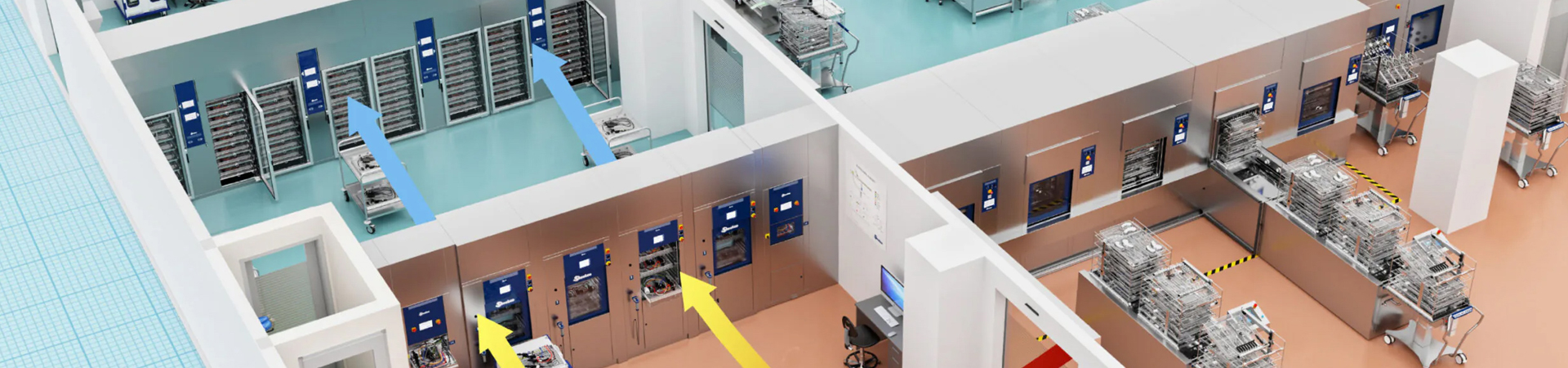
Joyhann presents a structured, step‑by‑step approach to designing and equipping a high‑performance Central Sterile Supply Department (CSSD). Our platform integrates advanced medical devices, ergonomic infrastructure, and validated protocols into a seamless workflow. Each step is engineered to eliminate cross‑contamination, optimize throughput, and provide complete traceability—from soiled instrument reception to sterile storage.The following steps represent the logical progression of instrument reprocessing. Every Joyhann product is embedded within this flow, not as standalone equipment, but as a critical component of an integrated system.
Objective: Immediately reduce bioburden and prepare instruments for mechanical washing, preventing organic matter from drying onto surfaces.
Upon entry into the contaminated zone, instruments are sorted and placed into the Ultrasound Cleaning System. This device uses high‑frequency cavitation (35–45 kHz) to generate microscopic bubbles that implode on instrument surfaces, dislodging proteinaceous debris from hinges, lumens, and serrations. The process achieves a ≥4 log reduction in bioburden before automated washing, which is critical for subsequent disinfection efficacy.
Technical note: The system includes automatic degassing to optimize cavitation and a self‑cleaning mode to prevent cross‑load carryover.
Objective: Achieve validated cleanliness and thermal disinfection (A0 ≥ 3000) in a fully automated, reproducible process.
Pre‑cleaned instruments are loaded into the Washer‑Disinfector—a pass‑through design that enforces unidirectional flow. Programmable cycles comply with ISO 15883, incorporating multiple phases: pre‑rinse, enzymatic wash (with temperature‑controlled detergent injection), intermediate rinse, thermal disinfection (hold at 90°C for 5 minutes, achieving A0 ≥ 3000), and final demineralized water rinse to prevent spotting.
Technical note: The cabinet features double‑glazed doors for visual monitoring and adjustable shelving to accommodate tall instrument sets.
Objective: Verify cleanliness, assemble instrument sets, and create a validated sterile barrier system.
In a positive‑pressure clean zone (ISO Class 7 or better), staff work at CSSD Furniture—modular stainless‑steel workstations with integrated LED lighting, magnifying lamps, and ergonomic height adjustment. Surfaces are seamless and coved to prevent biofilm accumulation. Drawers and shelving are organized for efficient storage of wraps, pouches, and chemical indicators.
Technical note: Workflow is optimized by positioning heat sealers and packaging supplies at arm’s length from inspection areas, minimizing movement and potential contamination.
Subscribe to comprehensive rehabilitation and therapeutic solutions from Fiziocare. Elevate patient outcomes across physical therapy, neuro-rehab, and post-operative settings with integrated, science-driven systems.
© Nortek HealthCare Group Ltd., 2009-2026. All rights reserved.
This site operates under the laws of the People's Republic of China. Your access and use constitute acceptance of these Terms of Use and our Privacy Policy. All content is governed by our Privacy Notice. For details or inquiries, please Contact Us or use the site's search function.