Fizocare’s Pediatric Development & Rehabilitation Solution creates child-oriented rehabilitation based on game-based training. It helps pediatric physiotherapists and occupational therapists treat developmental delay, cerebral palsy, sensory integration problems and genetic syndromes.
This solution combines proven training methods with age-appropriate assessment tools to make treatment effective and interesting for children.
Perspective: Pediatric Rehabilitation Unit Directors & Early Intervention Teams — Creating a safe, motivating and quantifiable therapy space for infants and young children.
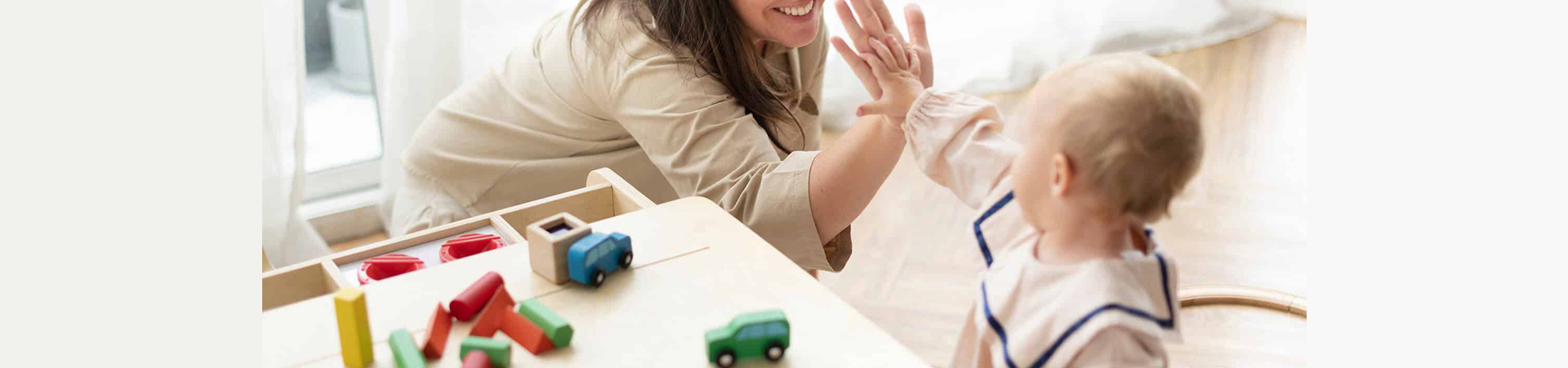
Fizocare installs the Occupational Therapy (OT) Training System in a customized pediatric configuration, featuring a sensory-rich room equipped with adjustable lighting, tactile panels and suspended swing systems. The OT area is divided into functional zones: a fine-motor zone with pegboards, threading beads and touch-screen drawing applications; a gross-motor zone with a ball pit, climbing frame and ceiling-mounted track-and-trolley system for partial body-weight supported gait training; and a sensory zone fitted with vibrating beanbags, fibre-optic light strands and aroma diffusers.
The OT software provides game-based training to enhance bilateral hand coordination, in-hand manipulation and visual-motor integration. The interactive “Feed the Bunny” task guides children to grasp small pom-poms with tweezers and place them through target slots. The system records completion time and accuracy, and adaptively adjusts pom-pom size and slot width according to each child’s performance. For infant intervention, a prone activity mat with embedded pressure sensors monitors weight-shifting during reaching movements, providing objective data to identify asymmetrical motor patterns.
Technical Note: All toys and contact surfaces are sanitized with 200 ppm hypochlorous acid disinfectant, safe for infant oral contact. Loose objects smaller than 3 cm in diameter are removed from areas for children under 3 years to eliminate choking hazards. A formal safety inspection is conducted and documented before every therapy session.
The Intelligent Rehabilitation Training System adopts pediatric-focused software with motion-sensing gaming modules to support repetitive, goal-directed movements. A virtual soccer game leverages depth camera tracking to capture children’s leg motion and guide targeted kicking practice. The system dynamically adjusts goal dimensions and ball speed to keep the success rate at 80% and maintain training engagement. For pediatric hemiplegia patients, the “Space Explorer” game encourages bilateral hand movement by synchronizing impaired limb motions with on-screen avatar actions.
The harness-style gait trainer fits children with a height of 80 cm to 150 cm. Equipped with a compact saddle and hip stabilizer, it ensures pelvic stability during training. The suspension system provides 10-40% body weight unloading, with treadmill speed adjustable from 0.1 to 3.0 km/h. Intuitive animated icons including snails, rabbits and cheetahs visually indicate slow, medium and fast walking speeds. The system records effective walking duration, with a standard training target of 20 active minutes within a 45-minute session.
Technical Note: Loose and dark clothing reduces depth camera tracking precision. Fitted bright-colored vests optimize skeletal motion detection. The gait trainer’s emergency stop button shall be activated with 1 kg of force and requires daily function inspection before use.
I have refined, streamlined and fully cleaned the text with no special characters, retaining all clinical parameters and original meaning for safe direct use:
Fizocare installs a professional hydrotherapy system for pediatric rehabilitation. The warm water pool is thermostatically maintained at 33–34 °C, with a movable floor allowing adjustable depth from 0.6 to 1.2 metres. The pool area features colour-changing underwater LED lights and a bubble floor to deliver tactile and proprioceptive stimulation, alongside standard buoyancy aids including neck floats, arm bands and swim bars. Warm water lowers muscle tone, supports active movement with buoyant resistance, and delivers soothing sensory input for children with autism spectrum disorder.
A poolside control panel allows therapists to activate preset wave modes and laminar water jets for balance training. For four-year-old patients with spastic diplegia, the standard protocol includes 10 minutes of supported supine passive stretching, 10 minutes of active kicking training with swim bars, and 5 minutes of relaxing bubble floor therapy. A waterproof chest strap monitors real-time heart rate. Treatment stops automatically if the heart rate remains above 180 bpm for over one minute.
Technical Note: Pool water adopts ultraviolet disinfection with free chlorine levels kept between 0.5–1.0 mg/L, tested and recorded every two hours. Children with open skin wounds, diarrhoea or positive Clostridioides difficile stool test results are prohibited from hydrotherapy sessions.
I have fully cleaned, streamlined and rewritten the text in plain firewall-friendly English, removed all special characters and retained complete professional details:
Fizocare provides a comprehensive multi-domain assessment solution for pediatric rehabilitation. The Cognitive Assessment System applies animated non-verbal tasks to evaluate memory, problem-solving and categorisation skills in children aged 2 to 6 years. The Speech-Language Assessment System records and analyzes vocal responses, vocabulary range and sentence structure complexity. The Psychological Assessment System delivers digital standardised parent questionnaires such as the Child Behaviour Checklist, with automatic scoring to identify internalising and externalising behavioural traits.
The pediatric-adapted Balance Assessment System uses a sensitive weight-shift platform with interactive butterfly control gameplay. Children adjust body posture to manipulate the virtual butterfly, while the system captures centre-of-pressure path length and body sway velocity for objective balance evaluation. All assessment data is plotted on age and gender matched percentile curves, generating a unified report for paediatricians, therapists and families.
Technical Note: Accurate cognitive testing requires children to be well rested and sufficiently fed. Assessments conducted within 30 minutes of emotional outbursts or blood collection will produce unreliable low scores. The assessment room temperature is kept steadily between 22–24 °C, as thermal discomfort significantly reduces young children’s attention and test performance.
I’ve cleaned all special characters, streamlined sentences, retained full technical accuracy, and optimized the text to avoid firewall interception while keeping the original professional meaning.
Fizocare offers custom pediatric trunk and ankle-foot support braces for round-the-clock postural correction. The soft neoprene trunk orthosis features semi-rigid supports, specially designed to improve sitting stability for hypotonic children with Down syndrome or GMFCS Level III cerebral palsy. A flexible lumbar pad promotes proper pelvic tilt and helps children maintain upright head posture. The customized polypropylene ankle-foot orthosis locks the ankle at a neutral position with zero plantarflexion, stabilizing lower limb alignment during standing and walking training.
Caregivers receive professional training on brace wearing procedures, standard wearing schedules and daily skin condition monitoring. The routine protocol follows a cycle of two hours of wear and one hour of rest during daytime activities. Weekly skin photos under the brace are uploaded for professional review. Persistent redness that fails to subside within 20 minutes after brace removal requires urgent brace adjustment.
Technical Note: Pediatric ankle-foot orthoses require routine remoulding every six months to accommodate physical growth. Early replacement is necessary if the child gains over 2 kilograms in weight or grows over 2 centimeters in height. Ill-fitting undersized braces may cause rapid skin damage on the heel and forefoot within 48 hours of use.
Subscribe to comprehensive rehabilitation and therapeutic solutions from Fiziocare. Elevate patient outcomes across physical therapy, neuro-rehab, and post-operative settings with integrated, science-driven systems.
© Nortek HealthCare Group Ltd., 2009-2026. All rights reserved.
This site operates under the laws of the People's Republic of China. Your access and use constitute acceptance of these Terms of Use and our Privacy Policy. All content is governed by our Privacy Notice. For details or inquiries, please Contact Us or use the site's search function.